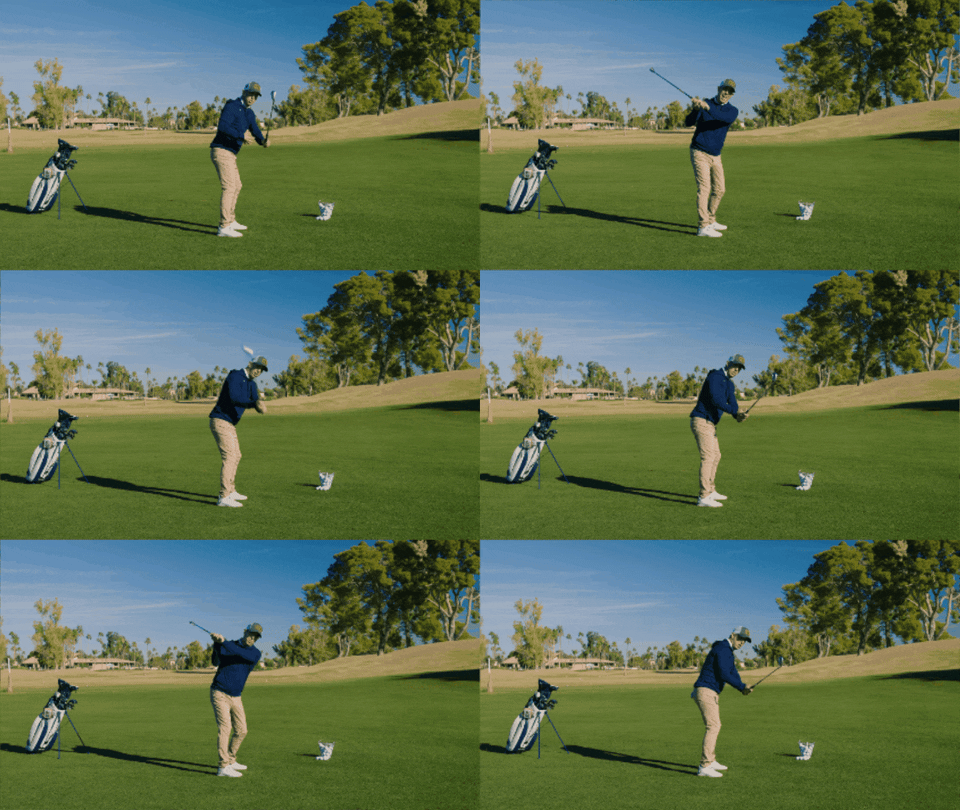
Consistency: Consistent wrist angles contribute to a repeatable swing. When your wrists are in the correct position, you’re more likely to strike the ball in the same way each time, leading to predictable ball flight and distance control.
Trajectory Control: The angle of your wrists affects the loft of the club at impact. Proper wrist angles can help you
control the trajectory of your shots, whether you need a high, soft landing or a lower, penetrating ball flight.
Shot Shaping: By adjusting your wrist angle, you can intentionally shape your shots. For example, slightly cupping the wrists can help create a fade (a shot that curves slightly from left to right for right-handed golfers), while bowing the wrists can help produce a draw (a shot that curves slightly from right to
left).
Impact Position: The correct wrist angles ensure that your hands lead the clubhead at impact, promoting a better strike on the ball. This "forward shaft lean" helps compress the ball, improving both distance and control.
Mastering the correct wrist positions can significantly enhance your overall performance on the course.
The Reverse Hinge Technique is one simple movement in your wrists…
You simply make this movement when you transition from backswing
to downswing.